ChatGPT's Superapp Pivot: What OpenAI's 2026 Overhaul Means
OpenAI is rebuilding ChatGPT into a business-focused superapp with AI agents, payment-in-chat and a developer SDK. What changes for normal users.
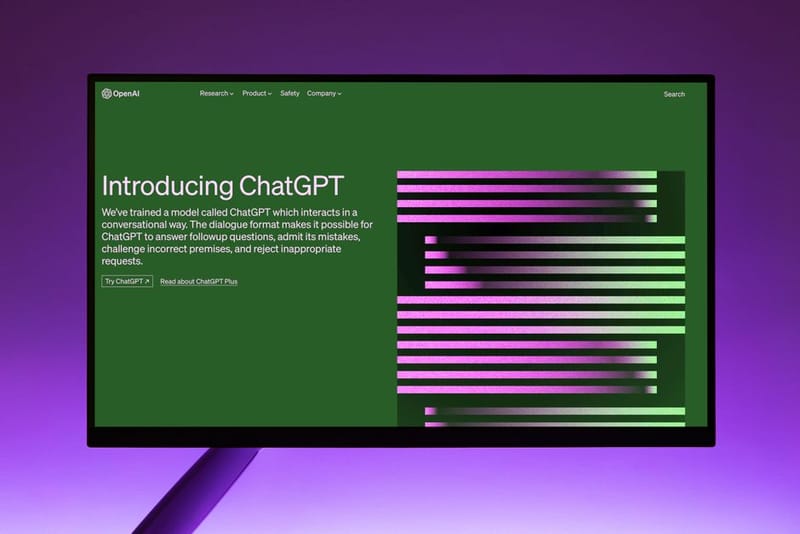

If you've used ChatGPT casually for the past couple of years, the changes coming through 2026 are going to feel like a bigger shift than the jump from GPT-3 to GPT-4 felt. OpenAI isn't just shipping a smarter model - it's rebuilding ChatGPT into something closer to a platform than a chat product, complete with apps, in-chat payments and a strong tilt towards business users.
Here's what's actually changing, what stays the same for everyday use, and the bits worth knowing if you're trying to make sense of where AI assistants are heading.
From chat box to action layer
The headline change is that OpenAI is positioning ChatGPT as an 'AI agent' platform - meaning the model doesn't just answer questions, it can take actions: book a flight, run a coding task, fetch data from your calendar, complete a checkout. The recent Apps SDK announcement formalises this: developers can build apps that live inside ChatGPT, and select partners can offer 'Instant Checkout' so payments happen without leaving the chat.
The practical difference between 'AI assistant' and 'AI agent' is the verb. An assistant answers; an agent does. Up till now, ChatGPT mostly answered (here's a recipe / here's the code / here's the answer). Going forward, more interactions will involve the model actually doing the thing - making the booking, running the script, charging the card.
Why the business pivot matters
Two related trends explain why OpenAI's tilting toward business + enterprise use:
- Money lives in the enterprise tier. Tom Tunguz's recent analysis of OpenRouter usage patterns observes that the AI market has split: businesses pay for precision with proprietary models like GPT-5 and Claude 4.7, while consumers use cheaper open-source models for casual tasks. The proprietary providers don't need to compete on price because they've already won the segment that pays.
- An IPO is on the horizon. A larger enterprise revenue base looks much stronger to public-market investors than a consumer subscription product whose margin keeps compressing. Rebuilding ChatGPT as a business platform - apps, agents, payments, developer SDK - is the pre-IPO product narrative.
What changes for a normal user
Honestly, less than the headlines suggest. The casual-user experience of opening ChatGPT and asking a question will work the same way it does today. What you'll notice over the next 12 months:
- More apps inside the chat. Think travel booking, code editors, shopping comparison, calendar integration - all surfaced via the chat interface rather than needing a separate browser tab. Some will charge directly; many will be free + supported by other revenue lines.
- Better coding assistance by default. Coding has become OpenAI's strongest enterprise revenue lever and consumer tools benefit from the same model improvements. If you write any code at all, the gap between asking ChatGPT and using a paid coding tool like Cursor or Claude Code keeps narrowing.
- Faster + cheaper fallback models. Free + Plus tier users get routed to the right-sized model for the task rather than always hitting the largest one. Most casual queries don't need GPT-5-class reasoning. Google's recent Gemini 3 Flash release applies the same logic from the competitor angle.
- Memory + personalisation gets harder to opt out of. Agents need long-term context to be useful, so OpenAI is leaning into persistent memory. Privacy-conscious users will want to check the memory settings regularly.
The competitive picture
OpenAI isn't alone in the agent pivot. Google is shipping Gemini 3 Flash as a faster + cheaper default and pushing the Gemini app deeper into Search, Gmail and Workspace. Anthropic is doubling down on Claude as the coding-and-reasoning premium tier with Claude Code as a dev-first product. Microsoft is rebuilding Copilot around the same agent-and-apps model inside Office and Windows.
The bifurcation pattern that Tunguz identified is real and growing: a small number of premium proprietary models for high-value work, and a much larger pool of cheaper open-source models (Llama, Mistral, Qwen, DeepSeek) for everything else. Most consumer-facing apps in 2026 + 2027 will be open-source underneath with a proprietary 'reasoning' model called only when needed.
The honest uncertainty
Two things are genuinely unclear:
- Whether 'agentic' workflows actually work at scale outside narrow tasks. Agents that book a flight + check email + run a script reliably without human babysitting is still mostly demo-ware in 2026. The Apps SDK is the infrastructure for building these, but reliability of multi-step agent chains in real use remains the open question. Sarah Tavel's essay on what models can't reach argues that as intelligence becomes commoditised, the value sits in tasks models genuinely can't do - the proof being that we still pay people for them.
- Whether the IPO valuation holds up under sustained competitive pressure. Open-source models keep closing the gap. Google + Anthropic + Microsoft are all spending big to stay competitive. OpenAI's pricing power has held through 2025 and into 2026, but the long-term moat depends on the apps + agents layer becoming sticky - not just the model being smart.
The bottom line
ChatGPT in 2026 is becoming a platform, not a product. For everyday users this means a chat interface that increasingly does things rather than just answering things, with third-party apps + payment built in. For developers it means a real SDK + monetisation path inside the chat. For OpenAI it means a credible enterprise + business revenue story ahead of an IPO.
None of that requires changing how you use ChatGPT for everyday queries today. But it does mean the gap between 'asking the AI' and 'getting the AI to handle it for you' keeps closing through 2026 and into 2027. Worth knowing where the platform is heading even if you're mostly along for the ride.