Matter 1.4: What's New for UK Smart Home Users
Matter 1.4 brings energy management, EV chargers, heat pumps and home batteries to the standard. What it means for UK smart homes in 2026.
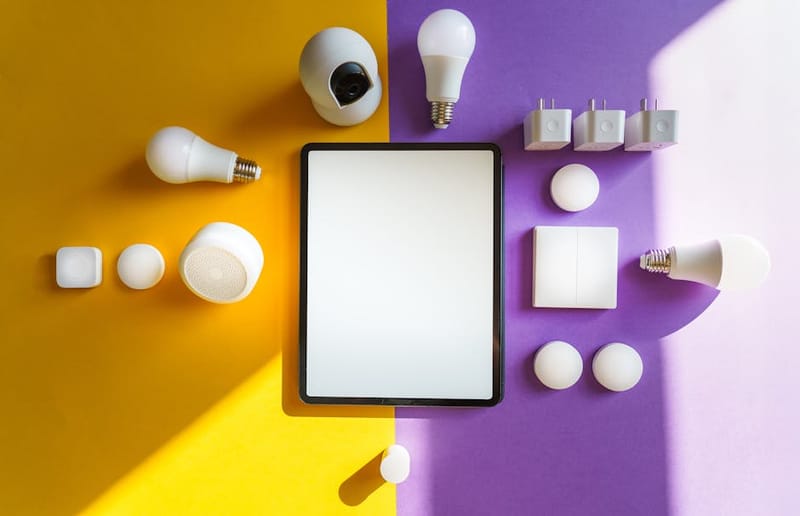

Matter helps with cross-platform compatibility, but it doesn’t resolve the underlying platform choice - see Apple HomeKit vs Google Home for the head-to-head on privacy, voice quality, and device range across the two consumer-grade options.
What Matter 1.4 Actually Adds
The headline features in plain English
Matter 1.4 was finalised by the Connectivity Standards Alliance, the industry body that develops the Matter smart-home standard, in November 2024. The version exists at two levels: the published specification (which device makers code against), and the open-source SDK release project-chip/connectedhomeip 1.4.0.0 (which is what hubs and platforms actually run). When people say "Matter 1.4 support" what they typically mean is "this product has been updated to use the 1.4 SDK."
The additions break down into a handful of categories.
New device types for energy
This is the headline change. Earlier Matter releases handled the easy stuff - bulbs, plugs, thermostats, locks, cameras. 1.4 finally adds proper device-type support for the kit that actually moves the needle on a household electricity bill:
- Solar power: solar inverters can now report generation and connect into the wider Matter network as first-class devices, rather than being stuck behind a manufacturer's app.
- Home batteries: battery storage can be managed, scheduled, and reported on through Matter - discharge timing, state of charge, the lot.
- Heat pumps: a proper device type for both space heating and hot water, including the ability to shift heating to cheaper electricity periods.
- Water heaters: standalone hot water cylinders (immersion-style or hybrid) get their own device type.
- Electric vehicle chargers (EVSE): domestic EV charge points become Matter-controllable, with charging schedules, current limits, and per-session reporting.
Energy Management cluster
Underneath those new device types is a new "cluster" - Matter's word for a feature group - for energy reporting and scheduling. In practical terms, it's the plumbing that lets a Matter hub see live import/export, schedule loads against a tariff, and shift heating or charging into off-peak periods. It's the spec foundation for the kind of automated load-shifting that makes time-of-use electricity tariffs (Octopus Agile, the half-hourly variable-price tariff from Octopus Energy,, Intelligent, Cosy, etc.) actually pay off.
Smoother setup
Matter 1.4 introduces an Enhanced Setup Flow: a bit more polish on the QR-code-and-pin commissioning experience, plus a way for devices that already know your Wi-Fi credentials (because they've been added to one ecosystem) to share them with a second. So if you've already added a hub to Apple Home, adding a new device to Google Home shouldn't make you re-type the Wi-Fi password - at least in theory.
Better multi-admin
Multi-admin is the bit of Matter that lets one device be controlled from several apps at once: Apple Home and Google Home and the manufacturer's own app, all looking at the same lightbulb. It's been functional but rough. 1.4 tightens it up - fewer bugs around device names and rooms going out of sync between ecosystems, and a clearer model for which app is the "primary" admin.
Why This Matters in the UK
Why the energy story is bigger here than elsewhere
If you've ever wondered why Matter has felt strangely focused on the United States - emphasis on smart bulbs, plugs, and thermostats from Honeywell-style central heating - 1.4 is a meaningful shift toward European reality.
Three UK-specific things make the energy story particularly relevant:
Heat pumps are growing fast. The Boiler Upgrade Scheme grants £7,500 toward an air-source heat pump, and the Future Homes Standard is tightening new-build requirements. A heat pump is a bigger automation prize than a gas boiler ever was, because its running cost is so much more sensitive to when you run it. A Matter-native heat pump that can be told "run between 02:00 and 05:00 when electricity is 7p/kWh" is genuinely useful.
EV adoption is high. The UK has one of the highest EV market shares in Europe. A typical home EV charger is by far the largest single load in most houses. Matter 1.4 means a Zappi, Ohme, Indra, or Hypervolt charger can - once the manufacturer ships a 1.4 firmware - be scheduled and limited from your hub of choice rather than each maker's app.
Time-of-use tariffs are everywhere. Octopus Agile, Octopus Go, Intelligent Octopus, Cosy Octopus, EDF GoElectric, OVO Charge Anytime - UK suppliers offer more dynamic-pricing tariffs than almost any other market. Matter 1.4's Energy Management cluster is the missing piece that lets a hub schedule heating, charging, and battery cycles against those tariffs without each device speaking a different proprietary language.
It's worth pairing this with our smart home energy saving guide - most of the manual tactics in there get easier to automate once 1.4 is in place across your kit.
There's also a quieter UK angle: solar self-consumption. With the Smart Export Guarantee paying so much less than peak import prices, the financial case for a home battery now hinges on shifting your own generation to your own consumption. Matter-native solar and battery devices make that integration far less of a one-vendor lock-in than it has been.
Will My Existing Matter Devices Get the Upgrade?
The honest answer: it depends on the manufacturer
Here's where the gap between spec and reality opens up.
Matter is a software standard. A device built for Matter 1.2 isn't physically incapable of running 1.4 - its hardware almost always supports it. But it has to be issued a firmware update by its manufacturer, and the manufacturer has to do the testing and certification work first. Some will be quick; many will not.
A reasonable rule of thumb based on how earlier Matter updates rolled out:
- Hub platforms (Apple Home, Google Home, Amazon Alexa, SmartThings, Home Assistant) tend to add new Matter SDK support within a few months of release. Apple Home and Google Home rolled out partial 1.4 support through 2025; expect broader support through 2026.
- Lights, plugs, switches, sensors mostly don't need to change - their device types haven't been updated, so a 1.2/1.3 firmware works fine.
- Energy hardware (heat pumps, EV chargers, solar/battery, water heaters) is where 1.4 is meaningful, and most existing kit doesn't speak Matter at all yet. New 1.4-native firmware for existing devices is rare; what's more common is new devices launching with 1.4 support out of the box.
- Older devices from small vendors may never get an update. Treat that as the realistic baseline rather than the exception.
If you bought a Matter device less than two years ago from a major brand (Aqara, Eve, TP-Link Tapo, Philips Hue, Nanoleaf, Switchbot), it's reasonable to expect some 1.4-related firmware update over the next year - though probably not on every product line.
Thread Border Routers in Matter 1.4 - what actually changed
Before Matter 1.4, every Thread Border Router (TBR) in your home formed its own isolated Thread mesh. An Apple TV 4K and a Google Nest Hub Max sitting in the same room would each run their own Thread network, with no awareness of each other; a sensor commissioned to one wouldn't see the other. Multi-fabric setups suffered for it - you ended up with a smart home where some devices were reachable from Apple Home and others from Google Home, but never the same device from both, and Thread mesh density was always lower than it could have been.
Matter 1.4 introduces coordinated Thread Border Router discovery and roaming. Multiple TBRs from different vendors can now register themselves on the home's network, advertise their Thread credentials cooperatively, and form a single unified Thread mesh that any TBR-aware device can join. The practical effects:
- Better Thread range. A single mesh covering the whole floor is denser than three small ones; weak corners of the house benefit immediately.
- Fewer commissioning surprises. A new Thread accessory will join whichever TBR is closest at pairing time, rather than the one specific TBR you happened to be standing next to.
- Cleaner multi-admin. Sharing a device between Apple Home, Google Home, and Alexa no longer requires those ecosystems to each run a separate Thread mesh - they share infrastructure.
- Border router redundancy. If one TBR drops offline, sensors that were reaching the controller through it can fall back to another TBR without a re-commissioning loop.
This is one of the changes that the Aqara M3 implements properly out of the box, and it's the headline reason that hub is a meaningful upgrade for any Thread-heavy household - the M3 acts as a TBR and a Matter controller and slots into the unified mesh that 1.4-capable Apple TVs, Echo Hubs, and Google Nest Hubs are now part of. Households running a mix of Apple HomePod minis (Thread-only, no Matter controller) plus a Nest Hub plus an Echo Hub are the biggest immediate beneficiaries.
The catch: TBRs need to be on 1.4-compatible firmware. The HomePod mini second-generation, Apple TV 4K third-generation, Echo Hub, Google Nest Hub second-generation, SmartThings Station, and Aqara M3 are all running 1.4 firmware by 2026. Older first-generation HomePod minis and the original Nest Hub Max are not.
What to Buy (and What to Wait For)
Practical buying guidance for UK households
The temptation when a new spec lands is to assume you should now wait for 1.4 versions of everything. That's mostly the wrong call.
Buy now, ignore 1.4:
- Bulbs, smart plugs, motion/door sensors, smart locks, contact sensors, smart switches. The 1.4 changes don't touch these device types in any meaningful way. If a 1.2 or 1.3 device ticks your boxes today, get it.
- A general-purpose smart hub (HomePod mini, Echo Hub, Nest Hub, SmartThings Station, or self-hosted Home Assistant). Hub firmware will pick up 1.4 features over time without you replacing the hardware.
Wait if it's specifically energy hardware:
- A new EV charger, heat pump, or home battery is a five-to-fifteen-year purchase. It's worth a few extra weeks of research to check whether the manufacturer has committed to Matter 1.4 support before you commit. Many haven't yet; some have.
- A new smart hot water cylinder or immersion controller - same logic. The 1.4 water heater device type is the right standard to be looking for.
Don't be sold the upgrade:
- Don't replace a working Matter 1.2 hub or device just because 1.4 exists. The features that benefit you arrive via firmware, not new hardware.
- Be sceptical of "Matter Ready" stickers on energy hardware that pre-dates 1.4. "Matter ready" sometimes means "we'll add it via firmware later" - and "later" is doing a lot of work in that sentence.
If you're starting from scratch, our smart home platform guide walks through choosing a hub ecosystem first, and your first smart devices covers what to add in what order. Neither of those depend on Matter 1.4 specifically - the right starting kit is the same.
2026 Matter 1.4-certified products to know
The Connectivity Standards Alliance maintains the canonical certified-product list, but for UK buyers the practical short-list of hubs and accessories that are 1.4-certified and on sale in 2026 is small. Pick a hub from this list if Matter 1.4 features matter to you on day one rather than via firmware later:
Aqara Hub M3 - full Matter 1.4 controller + Thread Border Router + Zigbee 3.0 bridge in one ~£100 mains-powered unit. The most-recommended budget 1.4 hub for non-Apple-only households (see our Aqara M3 review).
Apple TV 4K (3rd-gen, 2022 onward) - Matter 1.4 controller and TBR built into the Apple-Home stack. Free if you already own one; the lowest-friction entry into 1.4 for Apple-Home users.
Apple HomePod (2nd generation, 2023) - Matter 1.4 controller and TBR; HomePod minis 2nd-gen are also 1.4-capable. The 1st-gen HomePod mini is Thread-capable but Matter 1.3 only.
Amazon Echo Hub - the dedicated wall-mounted Alexa display ships with 1.4 firmware in 2026 and acts as a TBR. The newer Echo Dot and Echo Show 8 / Show 10 are 1.4-capable; older Echo Dots are not.
Google Nest Hub (2nd generation, 2021 onward) and Nest Hub Max - 1.4 firmware rolled out across 2025-2026. The original 1st-gen Nest Hub is not on the 1.4 path.
SmartThings Station - Samsung's 1.4-capable hub with a wireless-charging top. The classic SmartThings Hub V3 is also receiving 1.4 firmware; the older V2 is not.
Philips Hue Bridge (Square, white) - 1.4 firmware shipped late 2025 and brings the Hue bridge into the unified TBR mesh alongside the other 1.4 hubs. Hue accessories themselves remain Zigbee, surfaced over Matter.
For TBR-only Thread devices (no Matter controller role) the picture is broader - any 1.4-capable hub from the list above sits on the same mesh. Sensor and accessory devices ship 1.4 firmware steadily through 2026; the certified list at csa-iot.org/csa-iot_products is the canonical reference if you need to confirm a specific SKU.
Frequently Asked Questions
Do I need to do anything to get Matter 1.4?
Will Matter 1.4 break any of my existing devices?
Does my Apple Home, Google Home, or Amazon Alexa support Matter 1.4?
Is Matter 1.4 going to make my electric heating cheaper to run?
Should I buy a Matter 1.4 EV charger now?
Where can I read the actual Matter 1.4 spec?
New to Matter? Start with the basics
Our beginner's guide explains what Matter is, how it differs from Wi-Fi and Zigbee, and why it matters for picking your first smart home devices.