Agent-Assisted PRs: How MLX-LM Gets New Models Faster
What agent-assisted PRs for mlx-lm mean for UK Mac users: faster new-model support in Ollama, LM Studio, and the wider Apple Silicon ML ecosystem.
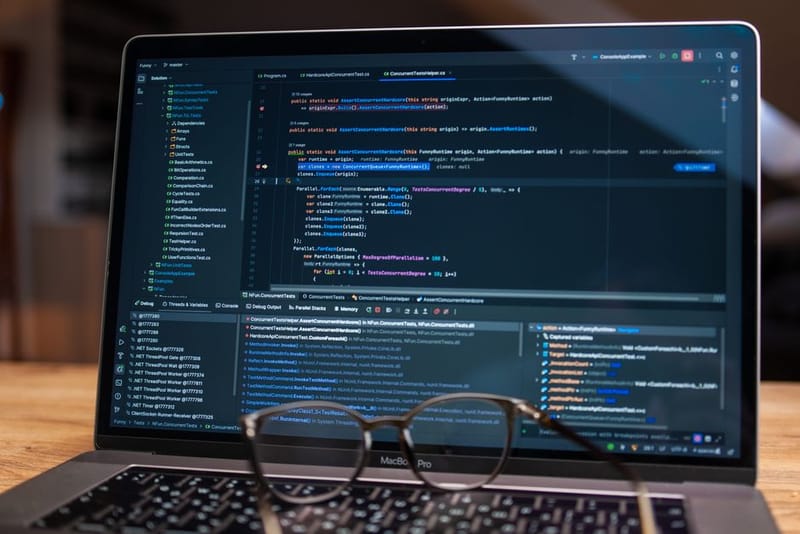

If you run local AI on a Mac, you have probably noticed that new models from Hugging Face, the AI model hub and community platform for machine-learning practitioners, do not always work in Ollama or LM Studio on day one. The reason is that someone has to port the model architecture to MLX (Apple's machine learning framework) before it works at Apple Silicon speed. Until recently that was slow human work. Hugging Face's recent announcement changes that.
This explainer covers what the new mlx-lm Skill and Test Harness actually do, why it matters for UK Mac users running local AI, and what it signals about agent-assisted open-source maintenance more broadly.
What problem does this solve?
Open-weight LLMs (Llama, Qwen, DeepSeek, Mistral, Gemma, Phi) are released by their creators in a standard format that PyTorch and Hugging Face Transformers can run. To run them at full speed on a Mac, they need to be converted to MLX format. The conversion involves writing model-architecture code in the mlx-lm repo, validating the output matches the original, and submitting a pull request.
Until the new Skill arrived, this was substantially manual work: a contributor would read the transformers source, write the equivalent mlx-lm code, test it on small inputs, fix bugs, submit a PR. Realistic timelines for new mainstream models were 2-6 weeks from Hugging Face release to mlx-lm support. For obscure or experimental architectures, it could be never.
What is the new Skill actually doing?
Two things, per the Hugging Face announcement.
- The Skill manages the porting workflow itself - reading the original transformers model code, generating the mlx-lm equivalent, running automated checks, and producing a PR with the changes plus a structured report explaining what was done.
- The Test Harness automates the validation step - taking the converted model and verifying that its output (on a battery of test inputs) matches the original within numerical tolerance. This is the most tedious part of manual porting and was historically a source of subtle bugs.
The agent does not merge the PR. Maintainers still review it before merging. But the human review is dramatically faster because the report explains what changed and why, and the test harness has already verified correctness.
What does this mean for Ollama and LM Studio users?
Faster new-model support. Ollama in particular has been heavily dependent on the mlx-lm project for Apple Silicon model support. When a new model lands in mlx-lm, it usually appears in Ollama within 1-2 weeks. If the new Skill cuts mlx-lm porting time by half (a plausible but unconfirmed claim), UK users running Ollama on M-series Macs should see new model releases hit the local-AI tooling 2-4 weeks faster than before.
The same logic applies to LM Studio (which uses mlx-lm under the hood for many Mac users), to the various MLX-native Mac apps, and to anyone using mlx-lm directly. New models become locally-runnable faster.
This does not change anything about how to use these tools - the UX is the same. You just notice fewer 'model not yet supported on Mac' messages when you try to run a new release.
Does this mean fewer humans maintaining mlx-lm?
No, but it changes what the humans do. The maintainers are still essential - they decide architecture choices, review PRs, debug edge cases the agent missed, and steer the project. What changes is that they are less bogged down in the rote conversion work. Per the announcement, maintainers can focus more on the harder problems (quantization quality, performance tuning, novel architectures) while the agent handles the standard ports.
This is the most interesting pattern in the announcement: not 'agents replace humans' but 'agents handle the predictable parts, humans handle the unpredictable parts'. The pattern generalises beyond mlx-lm to any open-source project where the bulk of work is type-aware boilerplate that an agent can handle reliably when given a strong test harness.
Will this approach show up in other Apple Silicon ML tools?
Probably yes, within 6-12 months. The Skill's structure - read a reference implementation, generate target code, validate via a test harness, file a PR - is generic enough that adjacent projects (llama.cpp for CPU/GPU work, MLC LLM for Metal-compatible mobile inference, vLLM for server-side) all have similar porting workloads. Whether each adopts the same pattern depends on whether the maintainers see the model-quality trade-off as net-positive.
For UK users running local AI, this is broadly good news. The community's bottleneck on new-model adoption has historically been human contributor time. Tools that genuinely accelerate that work mean local AI on Macs stays competitive with cloud-hosted alternatives.
What it does NOT mean
Three things this announcement does not change.
- Model performance on Mac. Running a model with mlx-lm is fast on Apple Silicon, but the new Skill is about porting, not about making models run faster. You still get the inference speed you got before.
- Model availability. Models that are NOT released openly - GPT-5, Claude 3.7, Gemini 2.5 - are not affected by this work. Closed-weight models do not appear on mlx-lm regardless of how fast the porting becomes.
- Quality of small local models. The Skill ports models; it does not improve them. The capability ceiling of a 7B-13B local model running on your Mac is what it was before. New mainstream model releases just become locally-runnable sooner.
Frequently asked questions
How do I check if a specific model is supported on Mac via mlx-lm?
Look at the mlx-lm repository on GitHub - the supported model list is maintained in the README. For Ollama specifically, run ollama list to see what is locally installed; for new models check the Ollama library at ollama.com/library. LM Studio shows compatible models in its built-in search.