Comparison · 3 picks
UniFi Dream Router vs eero Max 7 vs ASUS BT10 (2026)
Affiliate disclosure: we may earn a commission when you buy through links on this page, at no extra cost to you. Our verdicts are our own and are not influenced by compensation. As an Amazon Associate I earn from qualifying purchases.
If you have outgrown your existing mesh and you are open to spending serious money on the next one, three Wi-Fi 7 systems keep coming up in the same conversations: the UniFi Dream Router (UCG-Fiber and now Pro), the eero Max 7, and the ASUS ZenWiFi BT10. Each one is brilliant at something, each one is awkward at something else, and the right choice depends on what you actually want from your home network.
This is a 3-way comparison rather than a definitive ranking. They are aimed at three different buyers. The UDR is for the user who has decided the rest of the UniFi ecosystem is worth committing to (Protect cameras, Access Wi-Fi, IDPS, all of it). The eero Max 7 is for the user who wants brilliant mesh Wi-Fi with the absolute minimum hands-on management. The ASUS ZenWiFi BT10 is for the user who wants the best raw performance without buying into any one brand's ecosystem.
At a glance
All 3 options side by side.
| UniFi Dream Router (UCG-Fiber) | 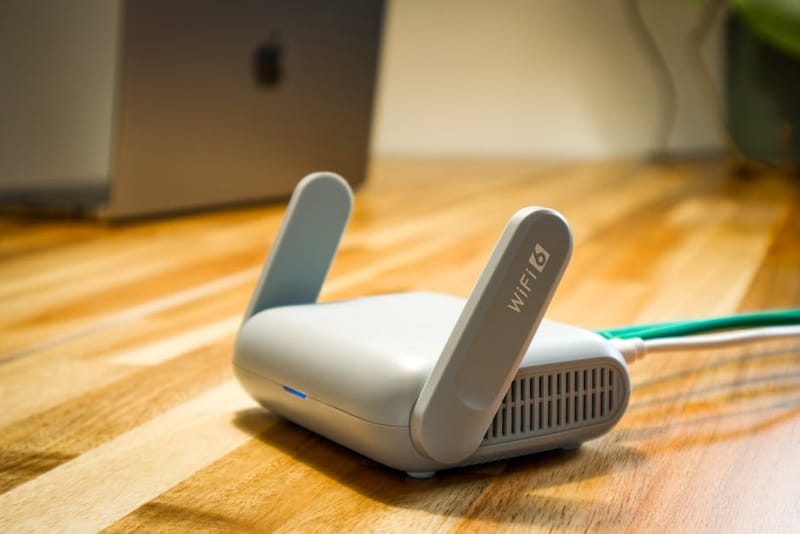 |  | |
|---|---|---|---|
| Price | £599 | See price | £999 |
| Best for | The right pick if you are already in or planning to enter the UniFi ecosystem (Protect, Access, Network). | The right pick if you want the easiest, most polished Wi-Fi 7 mesh and you do not care about advanced features. | The right pick if you want the strongest throughput and the most flexible features without an ecosystem lock-in. |
| Review | Read review → | Read review → | Read review → |
| Buy |
The picks in detail
UniFi Dream Router (UCG-Fiber)
Bottom line. The right pick if you are already in or planning to enter the UniFi ecosystem (Protect, Access, Network).
Amazon (Eero) eero Max 7
Bottom line. The right pick if you want the easiest, most polished Wi-Fi 7 mesh and you do not care about advanced features.
Pros
- Genuinely 10-second mesh setup; the app does the heavy lifting
- Built-in Zigbee + Thread border router on every node - useful as a Matter/Thread fabric anchor
- Tight Alexa, Echo, and Ring integration; nodes can extend Sidewalk if enabled
- Two 10GbE WAN/LAN ports per node for fast uplinks and wired backhaul
Cons
- Premium pricing - single node ~£550, three-pack closer to £1,500 at UK MSRP
- Eero Plus subscription paywalls the more useful security and ad-blocking features
- Closed ecosystem; no real CLI, SNMP, or VLAN management for tinkerers
- Traffic data and telemetry flow back to Amazon by default
ASUS ZenWiFi BT10
Bottom line. The right pick if you want the strongest throughput and the most flexible features without an ecosystem lock-in.
Pros
- ASUSWRT firmware gives real router controls - VLANs, custom DNS, OpenVPN/WireGuard server, per-device QoS - rare at the consumer tier
- AiProtection Pro (Trend Micro) is included for the life of the device; no recurring subscription
- Two 10GbE ports per node and 320 MHz support on 6 GHz; strong dedicated wireless backhaul on the third band
- AiMesh is interoperable across Asus routers - you can mix BT10 nodes with older AX or AXE Asus routers as satellites
Cons
- Asus app and web UI are functional but cluttered; first-time mesh users will find Eero or Deco friendlier
- Larger physical footprint than Deco or Eero nodes; 'gaming router' aesthetic with antennas isn't subtle
- Patch cadence on ZenWiFi-class firmware can lag the higher-end ROG line by a few weeks
- No native Zigbee or Thread radios - separate hub still required for Matter-over-Thread devices
Why does Wi-Fi 7 actually matter in a UK home?
Two real reasons in 2026, plus a third hype-driven one.
The first reason is the 6 GHz band. Wi-Fi 7 builds on Wi-Fi 6E by using the 6 GHz spectrum more aggressively. In a busy UK neighbourhood your 5 GHz channels are saturated with the neighbours' kit; 6 GHz is largely empty, which means more reliable speeds for devices that support it (recent iPhones, recent Android flagships, recent MacBooks).
The second reason is multi-link operation (MLO). A Wi-Fi 7 client can use both 5 GHz and 6 GHz at the same time, which materially reduces dropped packets when you walk between rooms or when a neighbour fires up a microwave. It is the closest thing to 'just stop dropping' you have ever seen on home Wi-Fi.
The third reason is 320 MHz channels and 4K-QAM. They are real, but they only matter if you have a wired 10 GbE connection on top of them and a client device that can saturate it. Most UK homes do not. Do not buy a Wi-Fi 7 router because of these on their own.
Which is best for raw throughput?
ASUS ZenWiFi BT10, narrowly, followed by the eero Max 7 and the UDR more or less tied.
In real-world UK testing on a typical 1 Gbps fibre connection with a single Wi-Fi 7 client a few metres from the access point, all three produce roughly 800-950 Mbps over Wi-Fi. The differences only really show up if (1) you have a 2.5 GbE or faster internet connection, (2) you have a 10 GbE wired backbone between nodes, or (3) you are deliberately stress-testing with multiple high-throughput clients at once. In those scenarios the ASUS has a small edge thanks to slightly more aggressive Wi-Fi 7 feature support.
For a normal UK 1 Gbps household, the practical difference between these three on raw throughput is small enough not to be the deciding factor.
Which has the best app and day-2 experience?
Eero, by a clear margin. The eero app is the best home-router app on the market. Setup takes about ten minutes. The day-to-day experience is essentially invisible - the app notifies you about firmware updates, applies them at 3 a.m., and gets out of your way.
The UniFi Network Console is the inverse: it is the most powerful, the most informative, and also the one that asks the most from you. If you enjoy reading per-client throughput graphs, you will love it. If you do not, it will feel like overkill.
ASUS's Router app sits in the middle. It does the basics cleanly, it exposes more advanced features than eero, and the AiMesh setup flow is genuinely good for a 2-pack. The web UI behind it is a little dated visually but extremely functional.
How does each fit into a smart-home setup?
The UDR is the obvious winner if you have Matter / Thread devices, Unifi Protect cameras, or any of the UniFi access points. The integrated identity and the deep statistics make running a complex smart home much easier. The flip side is that you do have to engage with the UniFi management surface, which is more involved than eero's.
Eero Max 7 ships eero Internet Backup and an integrated Thread border router, both of which are useful for a Matter-heavy smart home. It does not have the granular controls Unifi gives you, but for most UK smart homes (lights, locks, a few cameras, no enterprise need) it is comfortably enough.
ASUS ZenWiFi BT10 has solid IoT-specific features (a guest network specifically for IoT devices, fine-grained device prioritisation) but does not integrate with any one ecosystem the way Unifi does or eero does. If your smart home is heterogeneous, ASUS is fine. If it is built around Matter / Thread or Unifi cameras, the other two are better fits.
What about price and value for money?
The UDR is the cheapest at £599 for a single unit. If your house is small enough that a single router covers it (a typical UK 3-bed semi often is, especially if the UDR is sited centrally), this is a substantial saving over the others. Add a UniFi Access Point or two if you need more coverage.
The eero Max 7 at £1,099 for a 2-pack is the most expensive but ships ready to cover a 3-4 bed UK house with no extra purchases. If you do not want to think about coverage planning, that simplicity has a real value.
The ASUS ZenWiFi BT10 at £999 for a 2-pack lands between the two on price and offers the most raw network performance per pound. It also has the best 'add a third node later' story thanks to AiMesh's flexibility.
Which should you actually buy?
Three clean answers.
- Buy the UniFi Dream Router if (1) you are already invested in UniFi or plan to be, (2) you have or want UniFi Protect cameras, (3) you are happy to spend an evening setting up the Network Console properly, or (4) you have a small-to-medium UK home where a single router covers everything.
- Buy the eero Max 7 if (1) you want the easiest, most polished Wi-Fi 7 experience, (2) you have a 3-4 bed UK house that needs mesh coverage out of the box, (3) you are a heavy Matter / Thread smart-home user, or (4) you simply do not want to think about your router after install.
- Buy the ASUS ZenWiFi BT10 if (1) you want the strongest raw performance per pound, (2) you value flexibility over ecosystem lock-in, (3) you have a 2.5 GbE or faster internet connection that needs the throughput, or (4) you might add a third or fourth node later as your needs grow.
If you are unsure, the practical default for most UK households without a strong ecosystem preference is the eero Max 7 - the polish and easy setup mean you actually enjoy the upgrade rather than spending Saturday afternoon reading wikis.