Are We All Building the Same Digital Assistant?
Tech companies and indie builders are converging on the same AI-assistant shape. Here's what that future looks like and what's already real.

If you've noticed that every AI tool feels like it's drifting toward the same thing (a single named assistant, with your calendar and your email and your photos and your notes all stitched together behind one chat box) you're not imagining it. Tech writer Daniel Miessler made the case in April 2026 that this is a convergence the whole industry is heading for, not a marketing accident. He's mostly right. The interesting question is what shape that single assistant will take, and what a normal user should do today while it's being built.
What does "single digital assistant" mean?
The thesis, in plain terms: instead of you operating ten different tools (a chatbot for questions, a calendar app for scheduling, a separate email client, a separate task list, a smart-speaker for the kitchen), you'll talk to one named assistant that has access to all of them. The assistant remembers what you care about, knows where you are, sees what you're looking at, and acts on your behalf within boundaries you set.
Miessler calls the underlying infrastructure an "AI harness": not the model itself, but the surrounding plumbing that collects context (your calendar, your inbox, your location, your past preferences), holds it for the model to read, and routes the model's actions back out to the world. The model is interchangeable; the harness is what makes the assistant feel like yours.
The familiar analogy is the smartphone, which collapsed the camera, the MP3 player, the satnav, the diary and the games console into one device. The named-assistant convergence is the same shape: collapse the AI surface area that's currently spread across a dozen apps into one persistent identity.
Why is everyone converging on the same shape?
Three forces, in roughly equal weight.
Context is the moat. A model that doesn't know you is one prompt away from being replaced by a competing model. A model that has years of your context (preferences, history, social graph, recurring projects) is much harder to leave. Every vendor wants to be the one that holds the context; the only product shape that lets them hold it persistently is a named, always-on assistant.
The second is that the chat-app model is hitting its limits. Asking a chatbot "what's on my calendar?" twenty times a day, then having to copy the answer into another tool, is friction nobody likes. The fix is for the assistant to read the calendar directly. Once it can do that, it logically wants to read your email, your notes, your photos, and so on. That's the same convergence happening from a different angle.
The third is hardware. OpenAI has a device project (with Jony Ive involved); rumours of Apple's deeper integration with private cloud compute have been steady for two years; Google keeps trying to put Gemini on every surface they ship. Hardware vendors specifically want their device to BE the assistant, not just run it. That goal aligns the whole industry around the same product shape whether or not anyone planned it.
What's the closest thing you can use today?
Four options sit on a spectrum from "smart chatbot" to "genuine personal assistant".
ChatGPT, Claude, Gemini chat apps
The default starting point. All three now offer persistent memory of past chats; ChatGPT and Claude have integrations into Gmail, Google Drive, GitHub. None of them feels like "your assistant" yet; they feel like a smart chat surface that occasionally remembers you. Use these to learn what a good prompt looks like, not to replace any tools.
Apple Intelligence + Siri (iPhone/Mac)
On 2024+ Apple devices, the integration with calendar, mail, photos and messages is genuinely tight. The model behind it is weaker than ChatGPT, but the assistant knows what you're looking at and what was on screen ten minutes ago. The shape is closer to the single-assistant future than the standalone chatbots are.
Custom MCP setups (Claude Desktop, Cursor)
For technical users, Model Context Protocol lets you give Claude access to specific tools (calendar, notion, github, browser) one at a time. Effort to set up, but the assistant ends up genuinely useful in a way the consumer products aren't yet. Closest thing to the harness Miessler describes that you can actually run yourself today.
Smart-home assistants (Alexa+, Google Home with Gemini)
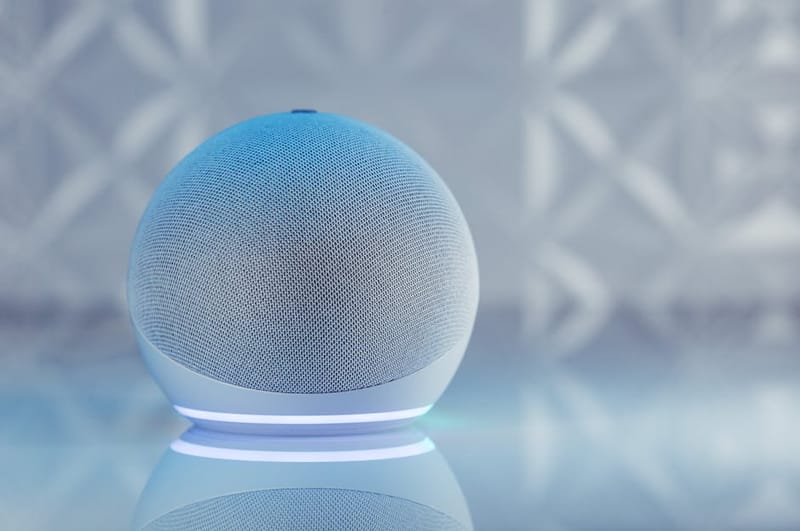
The voice surface is most-of-the-way-there. The integrations are narrow (your music, your smart bulbs, your shopping list). The product shape is right; the depth of context is still shallow. Useful as a sandbox to see what an always-on voice assistant feels like, not yet a full replacement for your phone.
How realistic is the "Jarvis" timeline?
The bold version of the prediction (a named assistant that sees what you see, hears what you hear, and acts proactively on a thousand tasks) is real as a direction. As a timeline it's less convincing.
The reasons the consumer product is hard aren't technical, mostly. Models are good enough already to handle the use cases. The friction is privacy law, platform power (Apple, Google, Microsoft own the surfaces the assistant needs to reach), and consumer adoption (most people are still nervous about giving any AI persistent access to their email, let alone their location and biometrics). Each of those resolves slowly.
A realistic two-to-three-year horizon: a much better version of what Apple Intelligence is today, deeply integrated into one device ecosystem, with most of the context-sharing happening within that ecosystem rather than across the open web. A realistic five-to-ten-year horizon: a cross-ecosystem assistant with regulated context-sharing standards (think GDPR but for AI context). The Minority Report version (gesture-controlled, sensor-fused, ambient) probably ten-plus years.
So: the convergence is real, the direction is right, the specific timeline is optimistic. Don't make life decisions based on it landing next year.
What should I do today (or not do)?
Four practical takeaways.
Don't rebuild your workflow around a specific assistant yet. If you make ChatGPT or Claude central to how you organise your week, you're locked into one provider's roadmap. Use them heavily, but keep the underlying data (notes, calendar, files) in formats and locations you control. The assistant should be a layer on top, not the source of truth.
Pick one assistant to live with for six months. Switching constantly costs you the context-accumulation benefit, which is most of the value. Whichever you pick (ChatGPT, Claude, Gemini, Apple Intelligence) will be roughly equivalent in 2026; the gap is closing month-by-month. Pick by which one fits your existing devices and stick with it long enough to find out where it actually helps.
If you're technical, explore MCP and self-hosted assistant tooling. You'll learn what the consumer products will eventually feel like, and you'll keep ownership of the context layer that the big platforms are racing to capture. Worth a weekend of setup if you find the topic interesting.
Be cautious with always-on context-sharing for the next year or two. The privacy story for the consumer-grade single-assistant products is unfinished. Giving your full inbox, calendar and location to a vendor today means trusting their data practices, retention policies, and security posture for years to come. The convergence will happen with or without you sharing everything early; you can opt in later when the practices have matured.
20 Actually Useful Things to Ask ChatGPT
Is AI Safe? An Honest Guide