Best Smart Radiator Valves UK 2026: 6 TRVs Compared
Smart TRVs compared for UK homes in 2026 - Tado V3+, Drayton Wiser, Hive, AVM FRITZ!DECT, Aqara E1 and Eve Thermo on subscriptions, integration and cost.


A smart radiator valve (or 'thermostatic radiator valve' - TRV) replaces your standard radiator dial with a motorised, app-controlled head. It lets you schedule each radiator independently, run different temperatures in different rooms, and (if integrated properly) tell the boiler to fire only when at least one radiator actually needs heat. In a UK home, a well-tuned smart-TRV setup typically saves 15-25% on heating spend - £150-400 a year for a typical 3-bed.
But the wrong TRV in the wrong system saves almost nothing. This post is the honest breakdown of the six brands that account for most UK installs in 2026 - what each does well, what each gets wrong, and which to buy for which household.
Which smart TRV is best for a UK gas boiler home?
Drayton Wiser - Best whole-house pick
Tado V3+ - Best geofencing pick
Hive Radiator Valves - Best if already on Hive
AVM FRITZ!DECT 302 - Best for FritzBox households
Aqara E1 - Best Matter-native budget pick
Eve Thermo - Best HomeKit-only pick
Which smart TRVs work best with Home Assistant?
For a Home Assistant-first household, the integration story matters as much as the TRV itself. Ranking by quality of HA integration as of 2026:
- Drayton Wiser: Excellent HACS integration (asantaga/wiserHomeAssistantPlatform). Surfaces every TRV, boiler call, and schedule into HA. Probably the best UK boiler-control HA experience available today.
- Aqara E1: Two routes - via Zigbee2MQTT (direct, no Aqara cloud) or via the official Aqara HA integration (cloud-bound but easy). Z2M is the preferred route for HA users.
- Tado V3+: Official HA integration via Tado API. Works fine but reflects the subscription-tier feature gating - geofencing only surfaces if you pay for Auto-Assist.
- Eve Thermo: Matter-native, so HA sees it via the HA Matter integration (no cloud). Limited to what Matter clusters currently expose - basic setpoint and current temperature only.
- AVM FRITZ!DECT: Official HA integration via the FritzBox SOAP API. Solid and stable but exposes only basic setpoint/temperature; the FRITZ! app does much more.
- Hive: Official HA integration via Hive's cloud API. Works, but Hive has been a slower-moving platform - some HA users have reported intermittent auth issues over the last 18 months.
Which smart TRVs are Matter compatible in 2026?
Matter's Thermostat cluster covers the TRV use case from Matter 1.0 onwards. What's changed in 2026 is which brands have actually shipped Matter firmware to existing hardware vs. which require a new SKU. The state of play:
- Aqara E1: Native Matter via Aqara M2/M3 hub firmware update. Works with Apple Home, Google Home, SmartThings, Home Assistant out of the box. Probably the easiest Matter TRV experience.
- Eve Thermo: Matter over Thread, no hub needed beyond an Apple Home Hub or other Thread Border Router. Premium price, premium integration.
- Tado V3+: Tado has confirmed Matter compatibility via the Bridge firmware - check your bridge firmware version (only newer bridges shipped from late 2025 onwards have it). Subscription still applies for the geofencing features.
- Drayton Wiser: No Matter support yet at time of writing. Wiser's Zigbee implementation is mature and the integration story via HA fills the gap; a Matter retrofit may come in late 2026.
- Hive: No Matter support, no public commitment yet.
- AVM FRITZ!DECT: Uses DECT-ULE, not a Matter transport. Won't ever be Matter; that's deliberate - DECT's strength is the dedicated spectrum.
For a Matter-first multi-ecosystem household, Aqara E1 or Eve Thermo are the natural picks. For a UK gas-boiler-first household, Drayton Wiser is still the right choice despite no Matter - the boiler integration outweighs the protocol story. See our Matter 1.5 explainer for the wider context.
How much do smart TRVs actually save on UK heating?
The vendor marketing claims ("save up to 30%") are best-case scenarios. The honest range for a typical UK 3-bed gas-boiler home, based on Energy Saving Trust modelling and aggregate user reports:
- Whole-house with boiler-aware control (Drayton Wiser, properly tuned): 15-25% reduction on a baseline of 'central thermostat plus manual TRVs'. Typical absolute saving: £180-400/year at 2026 gas prices.
- Per-room scheduling without boiler interlock (Tado, Hive): 10-18% reduction. Smaller because the boiler still fires for the room you're heating; you can't avoid the boiler running when only one TRV opens.
- Single TRV in an under-used room: 3-8% reduction on whole-house spend. Useful for a guest bedroom or office you only use a few hours a week.
- Heat pump rather than gas boiler: Treat TRVs with care. Heat pumps prefer continuous low-temperature operation; aggressive scheduling per room can undermine efficiency. See HeatPumpHQ.co.uk for heat-pump-specific TRV guidance.
Subscription cost matters too. Tado's £24.99/year wipes out roughly £25 of the saving and removes the geofencing that drives most of Tado's edge over Wiser. Once you factor in 5 years of Tado subscription (£125), Drayton Wiser's total cost of ownership is materially lower for most households.
How do I install a smart TRV myself?
Identify your valve body thread
Most UK radiators use M30x1.5 threads - the smart TRV brands above ship with M30 adapters. Older radiators sometimes use Caleffi or Danfoss RAV/RA bodies; check before ordering and order the right adapter pack.
Drain the radiator? No - you don't need to
All these TRVs replace just the head, not the valve body. Turn the existing radiator dial to maximum so the pin is fully retracted, then unscrew the old plastic head (sometimes a single grub screw, sometimes friction-fit).
Screw on the new smart head
Thread the new head onto the valve body. For M30 valves with adapter, fit the adapter first then the head. Hand-tight only - no spanner needed and any wrench will damage the head.
Pair with the hub
Drayton Wiser, Hive, Aqara: follow the app's add-device flow. Tado: press the TRV's button until the bridge LED flashes. Eve/AVM: HomeKit/FritzBox handles it. Pairing is usually 30 seconds per TRV; the hard part is reaching to the radiator behind the sofa.
Run a calibration cycle
Most TRVs auto-calibrate on first power-up by running the motor through its full range. If it doesn't, force one from the app. Skip this and your scheduling will be 1-3°C off for the first week.
Frequently asked questions
Do I need a smart thermostat as well as smart TRVs?
Will smart TRVs work with my heat pump?
How long do smart TRV batteries last?
Can I mix smart TRV brands?
What's the difference between Tado V3+ and the newer Tado X?
Do smart TRVs work with combi boilers?
The bottom line
If you're starting a fresh whole-house smart heating install in 2026 and have a UK gas boiler, Drayton Wiser is the default. Boiler integration plus no subscription plus great Home Assistant support makes it the highest-saving option for the most households.
If you specifically want excellent geofencing and you're willing to pay £25/year forever, Tado V3+ is a fair pick. If you're already on Hive, add Hive TRVs. If you have a FritzBox, add FRITZ!DECT 302s for the long-term-reliability play. If you want Matter-native and don't care about boiler interlock, Aqara E1 or Eve Thermo are the budget and premium picks respectively.
The bigger lesson is that the TRV by itself does very little. The savings come from the system around it - the hub, the boiler interlock, the scheduling logic. Buy the system, not the head.
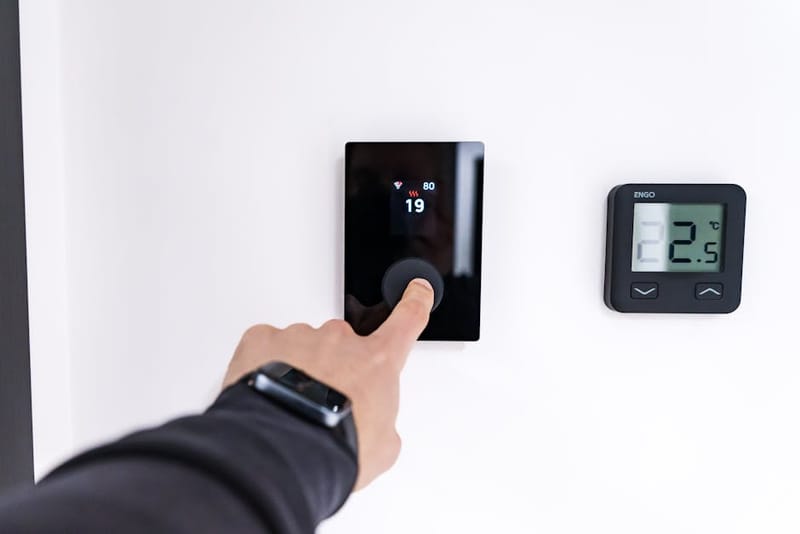
Best Smart Thermostats UK 2026: 5 Top Picks Compared
Matter 1.5: What's New for UK Smart Home Users

Matter vs Zigbee vs Z-Wave vs Thread: Smart Home Protocols