GenericAgent: When an AI Builds Its Own Repo From Scratch
GenericAgent is a 3K-line open-source agent that gives an LLM full computer control - and built its own GitHub repo without human help.
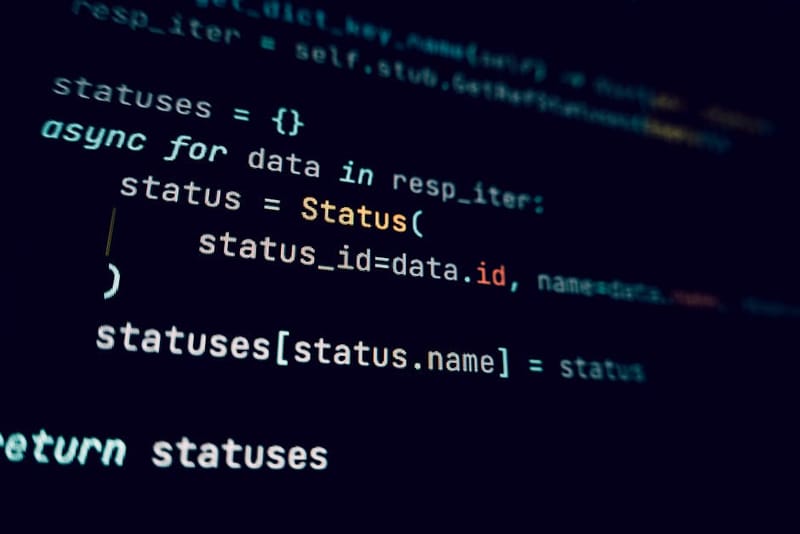

A new open-source project called GenericAgent crossed my feed last week with a claim that's hard to ignore: the author never opened a terminal once. Every single command in the repo, including the initial git init, was run by the agent itself. Three thousand lines of working code, set up by the very thing it implements. Whether the underlying framework is genuinely interesting or just a clever demo deserves a closer look, because the questions it raises (what does an agent need to be useful, what skills should it remember, what should you let it touch) apply far beyond this one project.
What is GenericAgent?
GenericAgent is a small Python codebase (~3,000 lines) that turns an LLM into an autonomous computer-using agent. You point it at a model API (Claude, Gemini, Kimi, or others), give it a task in natural language, and it executes by running shell commands, editing files, browsing the web, and asking for human confirmation when stuck. Created by lsdefine (affiliated with Fudan University, per the repo references), released on GitHub under the MIT licence.
The pitch is minimalism. Most agent frameworks (LangChain, AutoGen, CrewAI) ship hundreds of tools and dozens of abstractions; the user often spends more time wiring things up than actually doing the work. GenericAgent ships nine tools, full stop. The bet is that nine is enough if they're chosen well.
What are the nine tools?
Four for files and code (read, write, patch, run). Two for the web (scan a page, run JavaScript in a browser). One for asking the human (ask_user, when the agent needs confirmation or input). Two for memory: a short-term "checkpoint" notepad it can update mid-task, and a longer-term distillation step that converts completed work into reusable skill records.
The interesting move is the memory pair. Most agents either forget everything between tasks (so they re-solve the same problem ten times) or remember everything (so the context window fills up with irrelevant detail). GenericAgent's two-tier memory is the same shape as human working-memory plus long-term memory: small ephemeral notes while you're working, distilled patterns saved afterwards.
What is "skill crystallisation"?
The most novel idea in the project. When the agent finishes a task successfully, the framework converts the execution trace into a reusable "Skill" stored in memory. Next time a similar task comes up, the agent invokes the cached Skill instead of re-solving from first principles.
The analogy the project leans on is muscle memory. The first time you ride a bike you think about every action; the hundredth time the action is bundled into a higher-level skill ("riding"). The agent does the same. The first time it orders takeaway via an app, it figures out the navigation step by step. The second time, it has a Skill called "order takeaway via DeliveryApp" that captures the pattern.
Whether this works as advertised at scale is the open question. Skill crystallisation is a known-hard research problem in agent systems; the version GenericAgent ships is a clever-but-simple implementation rather than a solved one. As a starting point it's interesting; as a production architecture it's an experiment.
The self-bootstrap claim, examined
The headline claim is that the entire repo (installing git, running git init, writing every line, composing every commit message) was done by the agent autonomously, with the author never touching a terminal. This is a strong claim and worth examining honestly.
Charitable interpretation: it's true. The agent ran a shell, executed commands, wrote files, made commits. The skill crystallisation pattern would mean the agent built up reusable Skills (git commit, git push, install dependency) as it went, making each subsequent task cheaper. Setting up your own repo is exactly the kind of bounded task an agent can do well: finite steps, clear success criteria (the repo exists and the tests pass), no ambiguity about what "done" looks like.
The less charitable interpretation: the author did a lot of meta-work outside the terminal. Designing the agent, choosing what to write, reviewing the output, deciding which commits to keep. The agent did the typing; the human did the thinking. That's still impressive, but it's a different claim than "the agent built itself".
Both interpretations point at the same lesson. Letting an agent handle the boring mechanical work (setup, scaffolding, repetitive edits) while you stay focused on the design decisions is a workflow shift, not a science-fiction outcome. GenericAgent's repo shows what that workflow looks like at its current limit.
Should you actually run it?
Two categories of person, two very different answers.
Curious hobbyist on a spare machine
Yes, with caveats. Set it up on a VM, an old laptop, or a fresh container - somewhere a misbehaving agent can't break anything that matters. Run it on small, well-defined tasks first (set up a project, scaffold a repo, automate a tedious sequence) and watch what it does. The educational value is high; the practical-output value depends on whether your tasks fit the agent's strengths.
On your main work machine
No, not yet. The framework's nine tools include code_run with shell access, file_write, and browser execution - all of which can do real damage if the agent gets a task wrong. There's no sandboxing layer between the agent and your machine. For anything you care about (production code, personal documents, work projects), wait for the pattern to mature in tools that ship with proper isolation. Sandboxed-agent frameworks like the OpenAI Agents SDK exist for this reason.
The practical bar: do not give GenericAgent (or any agent with code_run access) credentials to anything you couldn't easily restore. Email, banking, payment apps, your real GitHub account. The skill-crystallisation feature also means an agent that learns a bad pattern early will keep applying it; treat the first few sessions as deliberate calibration, not production work.

Free AI Tools You Should Be Using in 2026
20 Actually Useful Things to Ask ChatGPT