Whole-Home Energy Monitoring UK 2026: What Actually Works
UK whole-home energy monitor roundup 2026. Hildebrand Glow, Shelly EM, Shelly Pro 3EM, IAMMETER, OpenEnergyMonitor. Why Tibber + Sense fail here.
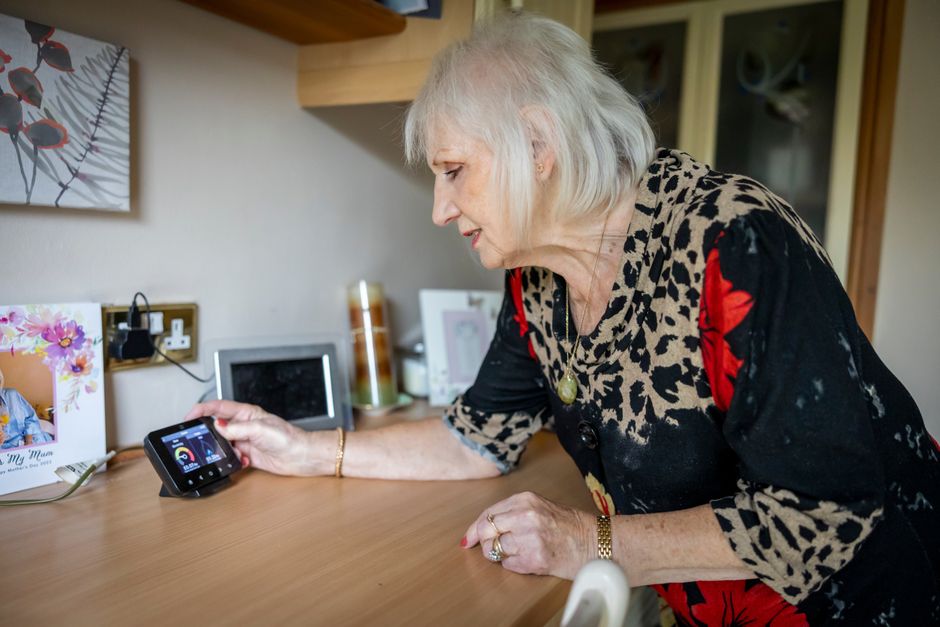

Whole-home energy monitoring used to mean buying an OWL or an EnergyHive clip-on meter at Maplin in 2014 and squinting at a £40 LCD. In 2026 the picture is much better - but UK-specific, because SMETS2 meters and the rest of the world's metering infrastructure don't always speak the same protocols. This guide walks through the realistic options for UK homeowners in 2026, what each one actually delivers, and which combinations pair well with smart-tariff strategies like Octopus Agile or Cosy.
Why is whole-home energy monitoring useful?
Three real wins. First, you stop guessing what each appliance costs to run - 30-second resolution data tells you the tumble dryer is the third-biggest draw in the house, not the fridge you've been worrying about. Second, you can time-shift big loads (washing machine, dishwasher, EV charging, immersion heater) into cheap-rate periods automatically if you're on a time-of-use tariff like Octopus Agile, Cosy, or Tracker - and the only way to measure whether the shift is actually working is real-time monitoring. Third, you spot regressions: a fridge seal failing, a pump cycling 4x more often after a service, a server humming away that you forgot you left running.
The home-automation enthusiast angle adds a fourth: Home Assistant's Energy Dashboard (a first-class feature since Home Assistant 2021.8) needs a real-time power source to do anything useful. Smart-meter monthly bills don't update fast enough; the monitoring devices below do.
Which device works with UK SMETS2 meters?
The honest answer for 2026: Hildebrand Glow. The Hildebrand Glow IHD (In-Home Display) and Glow CAD (Consumer Access Device) both connect to the DCC (Data Communications Company - the central nervous system of UK smart-meter data) over the SMETS2 HAN port. Glow then bridges that data to your home Wi-Fi via MQTT, where Home Assistant picks it up via the integrations directory. Pricing: around £60-£90 from Hildebrand directly.
What you don't get with Glow: per-circuit visibility. It tells you what the WHOLE house is consuming at 10-second resolution, but it can't distinguish the tumble dryer from the dishwasher. For that you need a CT-clamp meter (next section).
What you do get: the data is authoritative, source-of-truth from the same meter your supplier bills you against. No drift, no calibration. And there's nothing to install in the consumer unit, which matters if you don't fancy poking around live cables or paying an electrician.
What if you want per-circuit detail?
Now you're in CT-clamp territory. A CT (current transformer) is a magnetic ring that clamps over a live cable in your consumer unit and measures the current flowing through. Pair it with a small Wi-Fi module that reports the data, and you have a per-circuit meter. Two strong options:
- Shelly EM (single or dual channel) - around £30-£40 from Amazon UK or Shelly's UK store. One module, one or two CT clamps. Reports power and energy via Wi-Fi to Home Assistant (first-class integration). Sweet spot when you just want to monitor a specific circuit like the EV charger or the heat pump, separately from the whole house.
- Shelly Pro 3EM - around £80-£100. Three-phase capable (useful if your house is on a 3-phase supply - rare in UK domestic but common in commercial / EV-heavy installs), DIN-rail mountable, supports up to three CT clamps. The right pick when you want one device to monitor the whole consumer unit's incoming feed.
- IAMMETER WEM3050T - around £100-£130 via specialist UK importers. Three-phase or split-phase, runs entirely without a cloud account (a real differentiator vs cheaper Tuya-style CT meters that require a vendor app), bidirectional measurement (so it correctly tracks solar export). Home Assistant integration via the IAMMETER custom integration.
What about Tibber Pulse and Sense?
Both come up often in international Home Assistant blog posts, both don't easily work in the UK as of 2026.
Tibber Pulse connects to the HAN port of meters in countries where Tibber operates as an electricity supplier (Norway, Sweden, Germany, Netherlands). The UK Tibber subsidiary closed in 2023, and Tibber Pulse is not certified for UK SMETS2 HAN access - the DCC controls who can read SMETS2 data and Tibber are not on that list. Even if you buy a Tibber Pulse from the EU, you can't activate it on a UK meter.
Sense Energy Monitor is a CT-clamp meter with AI-based appliance detection (it learns the load signatures of individual appliances and tells you 'the kettle just turned on', 'someone opened the fridge'). It's a US/Canada product - around $300 - and Sense don't sell into the UK or support 230V 50Hz operation in their firmware. Importers exist but you'd be running unsupported hardware.
How does this pair with a smart tariff?
This is where energy monitoring earns its keep. Octopus Agile (the half-hourly tariff that follows wholesale prices) currently has unit rates that swing from negative (you get paid to use electricity) to around 35p/kWh peak. Without a monitor, you guess what each appliance costs at each half-hour slot. With one, your Home Assistant automation can read both 'current grid kWh' and 'current half-hourly Agile rate' and run high-draw loads (dishwasher, washing machine, EV charger, immersion) only in cheap slots.
The same logic applies to Octopus Cosy and Octopus Go (cheap overnight EV rates) - the saving is roughly proportional to how much of your usage you can shift, which you can only verify with continuous monitoring. The combination of a HAN device for whole-house source-of-truth AND a CT clamp on the EV charger or heat pump is the home-automation enthusiast's gold standard in 2026.
Is OpenEnergyMonitor still relevant?
OpenEnergyMonitor was the open-source / DIY energy monitor of choice in the 2010s - the emonPi base station plus emonTx CT-clamp inputs. In 2026 the project is still alive (the latest emonPi is the third revision) and remains the deepest, most data-rich choice for people who want true open hardware/software with no vendor dependency. The trade-offs are cost and complexity: a kit-built emonPi setup runs £200-£400, requires some configuration time, and the UI is less polished than Shelly's or Home Assistant's native Energy Dashboard. For most home-automation enthusiasts running Home Assistant, Shelly + Glow now covers what OpenEnergyMonitor used to, at lower cost and with first-class HA integrations. OpenEnergyMonitor remains the right call when you want totally independent self-hosted data with no vendor risk.
Which combination should you buy?
Just want to see the whole house at smart-tariff resolution: Hildebrand Glow IHD or CAD. £60-£90, no electrician needed, sourced from authoritative smart-meter data.
Want per-circuit visibility (EV charger, heat pump, immersion separately): Glow plus a Shelly EM dual-channel on the relevant circuit. Around £100-£130 total plus the electrician's time to fit the Shelly. Best price/data combination for most enthusiasts.
Want one device to do everything at the consumer unit: Shelly Pro 3EM. Around £80-£100 plus electrician. Pairs well with the matter-openadr-smart-home-energy strategy when it lands.
Want zero vendor dependency and don't mind kit-build effort: OpenEnergyMonitor emonPi3. £200-£400, more setup time, completely open source.
Just on solar PV with G98/G99 certification: IAMMETER WEM3050T. The bidirectional measurement and cloud-free operation are genuinely useful for solar households.
Does Tibber Pulse work in the UK?
What's the difference between Hildebrand Glow IHD and Glow CAD?
Will a Shelly EM let me see individual appliances?
Do I need an electrician to install a Shelly EM?
Can I use Home Assistant Energy Dashboard with just a Glow?
Read the Home Assistant Energy Dashboard guide
Once you have a Glow or Shelly EM source, the next step is wiring it into the Home Assistant Energy Dashboard - the UK SMETS2 setup we've covered before.