Best Smart Energy Monitor UK 2026
Best smart energy monitor UK 2026 buyer's guide. Hildebrand Glow IHD vs Bright app vs Tapo P110 smart plug vs Smart Me. By approach + smart-home use case.
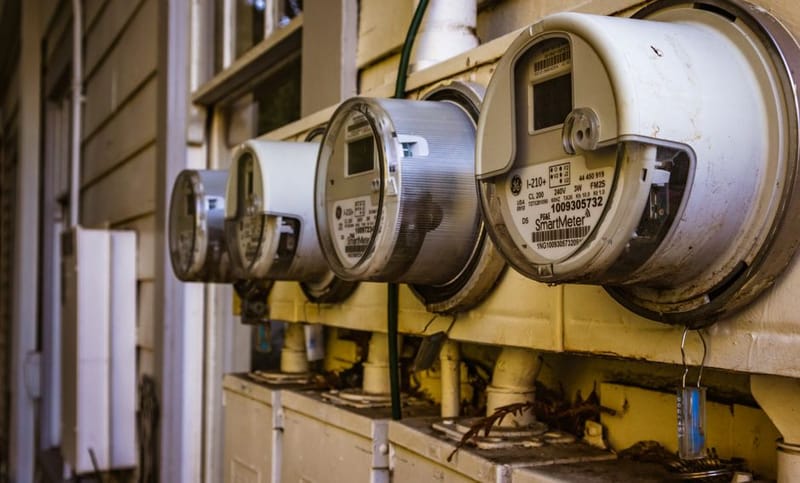

UK smart energy monitoring in 2026 splits into four practical approaches. SMETS2 meter readers (Glow IHD), app-based readers (Bright), per-plug monitors (Tapo P110, Shelly Plus Plug S), and whole-home clamp installs (Shelly EM, IAMMETER). This buyer's guide covers when each makes sense and which specific products are worth buying.
What are the four approaches to UK smart energy monitoring?
Choosing a monitor starts with deciding which approach matches what you need to see:
- SMETS2 meter readers. Hardware (Glow IHD) or apps (Bright, Loop) that pull data directly from your existing smart meter via the Consumer Access Device (CAD). Free or low-cost; gives accurate whole-home half-hourly consumption. Requires a working SMETS2.
- Per-plug monitors. Smart plugs with energy reporting (Tapo P110, Shelly Plus Plug S). Track individual appliance consumption - useful for high-draw items like fridges, kettles, washing machines. ~£10-£15 each.
- Whole-home clamp monitors. Devices fitted to your CU's tails (Shelly EM, IAMMETER, OpenEnergyMonitor). Read whole-home demand without a smart meter. Higher install effort; ideal if you don't have SMETS2 or want sub-minute resolution.
- EV charger and dedicated circuit monitors. Built into Ohme, Hypervolt, Zappi chargers and Shelly Pro 3EM clamps. Useful when you want to track specific high-draw circuits separately.
Most UK homes will use a combination. SMETS2 reader + 3-5 Tapo plugs is the standard 2026 home-monitoring stack.
Hildebrand Glow IHD - the SMETS2 reader pick
The Hildebrand Glow IHD (In-Home Display) is the standard 2026 SMETS2 reader for UK smart-home users. It's a small puck that pairs with your smart meter's Consumer Access Device and exposes consumption data to:
- The free Bright app (iOS, Android) for households.
- Home Assistant via MQTT - real-time half-hourly readings as HA entities.
- Hildebrand's web dashboard for browser access.
Price: £60-£80 from Hildebrand directly or via Amazon UK. One-off cost; no subscription.
Strengths: accurate, drives the Octopus Energy + HA integration's consumption sensors with real-time data, works with both SMETS1 (paired) and SMETS2 meters.
Trade-offs: requires you to have a working CAD on your meter (most do; some flakier installs need an engineer visit). Not real-time enough for sub-minute appliance investigation - that's per-plug's job.
Bright app - the no-hardware free option
If you don't want to buy a Glow IHD, the Bright app reads the same data from the smart-meter network directly (no hardware required) - though typically at a 24-48 hour lag, not real-time.
Price: free (Hildebrand monetises the data, anonymised, on the back end).
Strengths: zero hardware install, just sign up and pair with your MPAN. Good enough for monthly bill checks and high-level pattern spotting.
Trade-offs: lagged data (not real-time), no HA integration without an IHD bridge, no per-half-hour push events to drive smart-home automation. For passive monitoring only.
Tapo P110 - the budget per-appliance pick
The TP-Link Tapo P110 is the budget standard for per-appliance UK energy monitoring in 2026. £10-£15 each; ~£40 for a 4-pack on Amazon UK.
- Reports: current power (W), today's energy (kWh), week's energy, total. Updates roughly every minute.
- Cloud: Tapo app for phone access. Local API for Home Assistant via the Tapo integration (HACS).
- Connectivity: Wi-Fi 2.4 GHz only - no Matter or Thread on the P110 yet (the P115 Matter variant is similar but doesn't include energy monitoring as reliably).
Use cases: fridge consumption tracking, washing machine cycle costs, kettle daily total, server / mining rig power. Plug-in appliances that draw more than ~50W are visible; smaller draws like phone chargers are below the noise floor.
Strengths: cheapest per-appliance monitoring; the HA integration is mature; multi-pack discounts make a 4-5 plug setup affordable.
Trade-offs: Wi-Fi-only (Wi-Fi-light households start to struggle past 5-6 plugs); cloud dependency for Tapo app features; no whole-home or clamp option.
Shelly Plus Plug S - the HA-first alternative
For Home-Assistant-first households, the Shelly Plus Plug S is a Tapo P110 competitor with better local-API design and Matter support. £18-£22 each.
- Reports: same metrics as Tapo P110 (W, kWh).
- Local API: excellent - works without cloud; native HA integration is among the cleanest in the smart-plug space.
- Matter: supported on firmware 2024.x+ - works as a Matter Smart Plug with energy reporting if you have a Matter Controller hub.
Use the Tapo P110 for budget; use the Shelly Plus Plug S when local control and Matter support matter more than the £10/plug saving.
Smart Me - the multi-circuit alternative
Smart Me is a Swiss-made meter that reads SMETS2 directly via the CAD network and pushes real-time data to its cloud dashboard. UK availability is more limited than Glow IHD but it's a credible alternative if you want a different vendor.
- Price: ~£100-£130 UK.
- Strengths: good visualisation tools; supports up to 3 meters from one device; energy export tracking built in.
- Trade-offs: the Bright/Glow ecosystem is much larger in UK home-automation circles; less Home Assistant integration depth than Glow IHD. Pick this if you specifically need its multi-meter feature.
Recommended kits by household type
Practical kit recommendations for typical UK setups:
- Minimum viable setup (£0-£80): Bright app alone (free) or Hildebrand Glow IHD (£60-£80). Get whole-home consumption + standing charge tracking. Good enough for tariff decisions and bill spot-checks.
- Standard smart-home setup (£100-£140): Hildebrand Glow IHD + 4× Tapo P110 (~£40). Whole-home consumption + 4 high-draw appliance circuits. Covers fridge / washing machine / dishwasher / kettle for most UK homes.
- Power-user setup (£200-£350): Hildebrand Glow IHD + 6-8× Shelly Plus Plug S + Shelly EM clamp on the consumer unit for EV charger circuit. Full local-only control via Home Assistant; granular per-circuit and per-appliance data.
- Solar + battery setup (£350-£500): all of the above plus Shelly Pro 3EM for solar generation + battery cycling. Pair with Octopus Outgoing for export tracking. Total kit pays for itself in tariff optimisation within 12 months for most households.
Frequently asked questions
Do I need a smart meter to use any of these?
What's the difference between Glow IHD and the energy supplier's IHD?
Can I use Octopus Energy's API directly without a smart energy monitor?
Will smart energy monitors save me money?
Which smart plug is best for fridges and freezers?
What about the official Smart Meter In-Home Display?
The bottom line
For UK households starting smart energy monitoring in 2026, the practical recommendation is: get a Hildebrand Glow IHD as the foundation (£60-£80, drives whole-home consumption data into HA and the Bright app), and add 3-5 Tapo P110 plugs (~£40 total) for the appliances you actually want to monitor individually. That £100-£140 setup covers 80% of household needs.
If you're Home-Assistant-first and want pure local control, swap the Tapo P110 plugs for Shelly Plus Plug S at a £10/plug premium. If you have solar or battery, add a Shelly Pro 3EM at the consumer unit for granular per-circuit monitoring. The product spread covers everything from £0 (Bright app alone) to £500+ (full power-user kit).
Pair this guide with our whole-home energy monitoring guide (which covers the clamp-based options in more depth), Home Assistant Energy Dashboard for UK SMETS2 meters, and our new Octopus Energy + Home Assistant integration guide. Background reading on the SMETS2 ecosystem: the official Smart Energy GB site explains the meter standards.
Compare current UK prices
Glow IHD ~£60-£80 (Hildebrand / Amazon UK); Tapo P110 ~£10-£15 (Amazon UK multi-packs cheapest); Shelly Plus Plug S ~£18-£22.