What Is Aliro? The New Smart-Lock Standard Explained
One phone, one credential, many locks - Aliro 1.0 landed on 26 February 2026 with Apple, Google and Samsung on board. Here's what it actually does, what's shipping now, and whether it's worth waiting for.
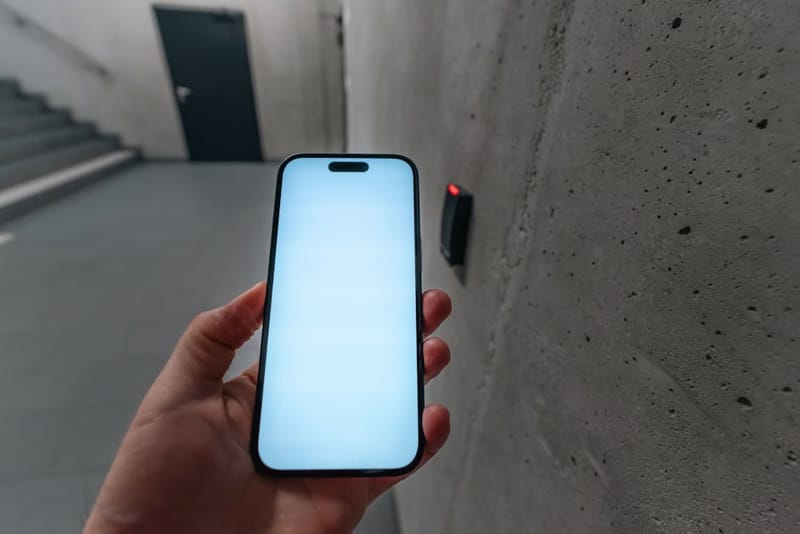

What Is Aliro, Really?
Smart locks today are a mess. A Yale lock needs the Yale app. A Schlage uses the Schlage app. A Nuki uses Nuki. If your hotel uses an Assa Abloy reader and your office uses Kastle, that's two more apps and two more accounts. Each manufacturer invented its own little world, and you had to live in all of them at once.
Aliro is the standard that makes that go away. Think of it as USB-C for door locks: a single, agreed-upon way for a phone, watch or wearable to prove to a reader that you should be allowed through, regardless of who made either device. The credential - the digital equivalent of your key - lives in your phone's wallet (Apple Wallet, Google Wallet, Samsung Wallet, Samsung's digital wallet app for Galaxy devices that holds payment cards and digital keys,). The lock, if it speaks Aliro, can verify that credential without needing the lock manufacturer's own app installed on your phone.
The protocol was developed by the Connectivity Standards Alliance (CSA), the same not-for-profit standards body that publishes Matter and Zigbee. If Matter is the standard that made your light bulbs and thermostat talk to each other, Aliro is the equivalent move for the front door.
How It Actually Works
Aliro supports three different ways for your phone to communicate with a lock, and a given lock can support one, two or all three. The three modes are picked deliberately - each one fits a different use case.
NFC tap-to-unlock
The simplest mode. Hold your phone or watch against the lock, the way you'd tap to pay. Short range, no battery drain, works even when your phone is in low-power mode.
Bluetooth Low Energy (BLE)
Longer-range. The lock can recognise your phone from a few metres away and respond when you press a button or use Face ID. Less precise than UWB but supported on basically every phone made in the last decade.
Ultra-Wideband (UWB) plus BLE
The hands-free mode. UWB measures distance and angle with centimetre accuracy - the same radio Apple uses for AirTag direction-finding. The door knows where you are and opens as you approach, but only when you approach from outside. UWB is currently in iPhone 11 and later, recent Samsung Galaxy S and Pixel flagships, and a growing list of Android phones.
Under the hood, every Aliro exchange uses asymmetric cryptography: the lock has a public key, your phone has a private one, and the two negotiate without ever sending the actual key over the radio. The CSA designed this to be privacy-preserving as well as secure - a passing phone shouldn't be able to fingerprint you just because you walked past a lock.
Who's Backing It
The list of supporters is the unusual thing about Aliro. New standards normally launch with a handful of companies and quietly fail. Aliro launched with all three major mobile platforms publicly on board - Apple, Google and Samsung - and the wallet apps on those platforms have all committed to storing Aliro credentials.
On the lock side, the heavyweights of the access-control industry are involved: ASSA ABLOY (which owns Yale, August, HID and others), Allegion (Schlage, Kwikset, LCN), plus smart-home brands like Aqara, Nuki, and the cylinder-replacement crowd. Silicon suppliers Nordic Semiconductor, NXP and STMicroelectronics are in the membership too, which matters because they're the ones who put the BLE and UWB radios into the chips inside cheap consumer locks.
Over 220 companies in total contributed to the 1.0 specification. That's broad enough that it's hard to see Aliro fail outright the way some past wireless-access attempts have. The bigger question - covered below - is how long it takes to actually reach your door.
What's Actually Shipping Right Now
This is the awkward part. Aliro 1.0 was published in late February 2026. The launch listed dozens of supporting brands, but at the point of release only one smart lock - the Aqara Smart Lock U400 - was being publicly claimed as Aliro-compatible hardware. The rest of the membership announced intent, not stock on shelves.
Why the gap? Two reasons. First, lock manufacturers design hardware on multi-year cycles. The locks shipping in early 2026 were designed before the Aliro spec was finalised, so retrofitting Aliro into them requires either a firmware update (only possible if the existing radio supports it) or a new hardware revision. Second, the certification programme that lets a manufacturer put "Aliro Certified" on the box only became operational alongside the 1.0 release. Brands have to send hardware to test labs and wait.
The realistic timeline most analysts are using: a meaningful number of Aliro-certified locks on UK shelves by late 2026 to mid-2027, with the bulk of major brand catalogues turning over by 2028. Existing locks will not, in general, get an Aliro update - the underlying radios are usually different from the ones the spec assumes.
Should You Wait, or Buy Now?
Honest answer: don't change your buying plans in 2026 to wait for Aliro. Here's the reasoning.
If you need a smart lock now - a recent move, a Yale that just died, an Airbnb you're managing - buy the best lock available for your door right now. Today's best smart locks already do Apple Home Key, NFC tap-to-unlock, and integrate with HomeKit, Google Home and Matter. The day-to-day experience is genuinely good. Aliro will make the underlying tech better, but it won't make the lock you can buy in May 2026 noticeably more convenient than the one you can buy in May 2027.
If you're at the very start of a project - a new build, a major renovation, replacing every door in a property - and you're 12+ months from buying, then it's worth keeping an eye on Aliro-certified launches in late 2026. By then you'll be able to choose between brands with confidence that they'll all interoperate. Until then, lock yourself into whichever ecosystem (HomeKit, Matter, vendor-specific) you already use and don't fight it.
The one group who should actively wait: anyone planning a multi-occupant or commercial setup where multiple people need credentials. That's exactly where the lack of secure key sharing in 1.0 bites, and that's also where Aliro's open-platform model will help most once the feature lands.
How Aliro Relates to Matter
A reasonable thing to ask: didn't Matter already do this? Matter 1.2 added door locks as a device category, and Matter 1.4 tidied up some of the rough edges. So why a separate standard?
The short version: Matter and Aliro solve different parts of the problem. Matter is about your smart-home hub being able to see the lock, automate it, and report its state - "unlock the door when I'm home", "tell me if the back door is open", "include the lock in my morning routine". Aliro is about the credential exchange between your personal device and the lock itself - the moment of authentication when you actually want to walk through the door.
They're complementary. A lock that supports both speaks Matter to your smart-home hub for automation, and speaks Aliro to your phone for the unlock. The CSA owning both is a strong signal that they're meant to work together - and several of the same companies are deeply involved in both. If you've already started building a Matter-based smart home, Aliro is the natural next layer.
If you're still trying to make sense of Matter itself, our explainer covers the basics: what Matter actually is and why it changes smart homes. And for the latest version of the spec, see Matter 1.4: what's new for UK smart-home users.
What This Means for You Right Now
Three concrete takeaways:
- Don't rush. Aliro is real, well-backed and worth caring about, but the hardware isn't there yet. Buying decisions made in 2026 should not assume Aliro support.
- If you're shopping now, our current best smart locks for beginners (2026 UK guide) covers what's genuinely worth installing today. Yale Linus L2, Nuki Pro 4G, Aqara U200, and SwitchBot Lock Pro are all solid choices that will keep working fine even when Aliro arrives.
- Watch the wallet apps. The clearest sign Aliro is moving from press-release to reality will be when Apple Wallet, Google Wallet and Samsung Wallet start showing the option to add an Aliro home key. Expect that across late 2026 alongside the first wave of certified locks.
Frequently Asked Questions
Is Aliro the same as Apple Home Key?
Will my existing smart lock get Aliro via a firmware update?
Does Aliro work with Matter?
Can I share an Aliro key with my partner or a dog walker?
Which phones support Aliro?
When will Aliro locks actually be on shelves in the UK?
Is Aliro secure?
Shopping for a smart lock today?
Our roundup of the best UK smart locks covers what's actually worth installing right now, with an install-difficulty decision tree.